
ACTION FOR A RESILIENT TOMORROW (ART)
This isn’t about art.
It’s about action.
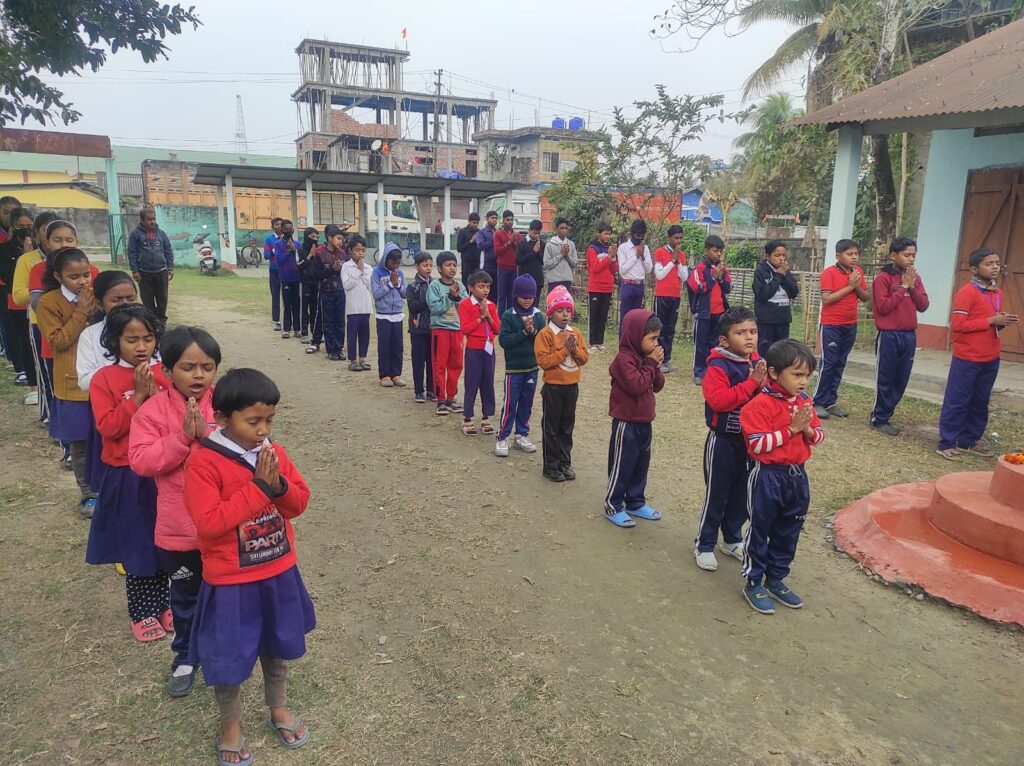
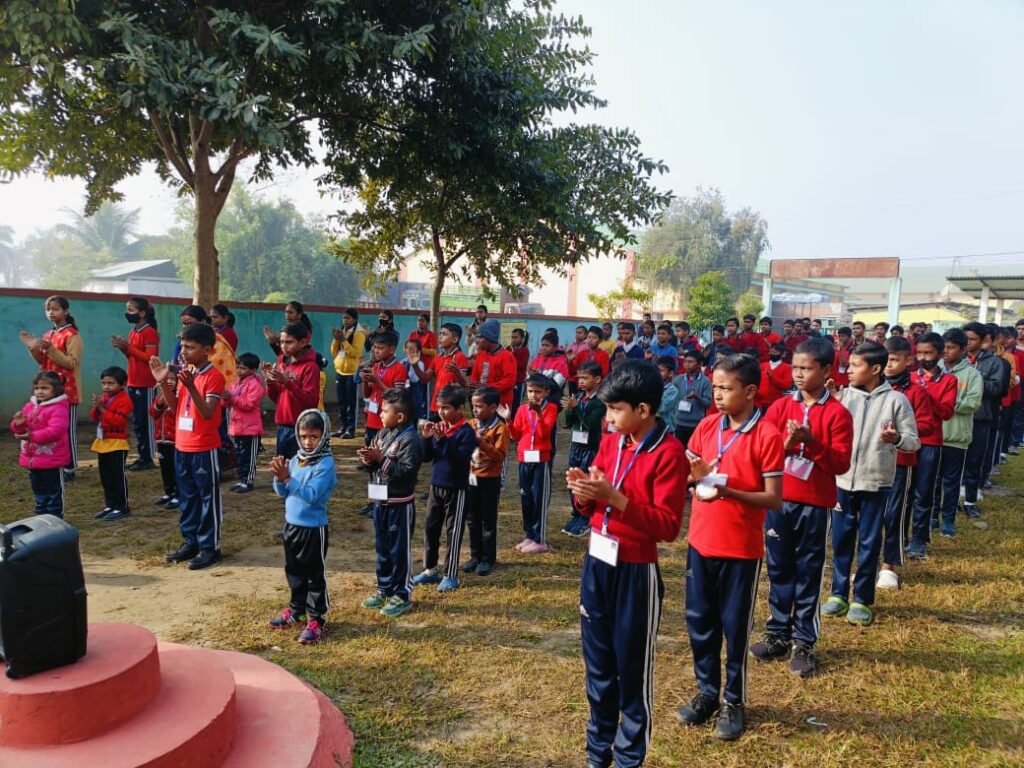
ART stands for Action for a Resilient Tomorrow — a research-grounded educational intervention I run for schoolchildren in Rangia, Assam. Literacy, mental well-being, civic awareness, and a fellowship model that outlasts any single visit.
Rangia isn’t a backdrop. It’s the argument.
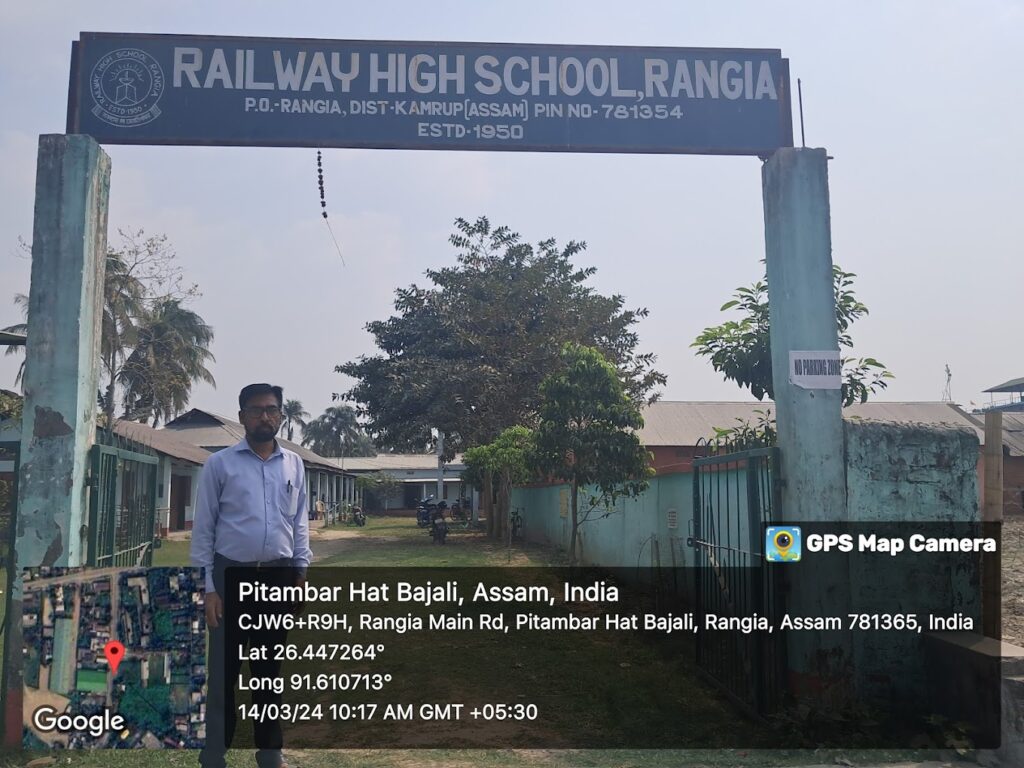
Rangia sits in the Kamrup district of Assam — a quaint township which houses institutions, some of which have are operational since 1936.5 On paper, literacy here looks respectable. Underneath the average, the gap is the story.
Male literacy runs roughly 11 points ahead of female literacy across the wider Rangiya area5 — the exact gap that decides who gets to stay in school, and who gets pulled out first when a family has to choose.
Resilient
The word we build around — not a metaphor, a design target
“Protective factors operate at the individual, family, school, peer, and community level to buffer children against risk.” — Systematic review of 119 studies on academic resilience, Frontiers in Psychology, 20241
ART is built to hit every one of those five levels on purpose: school-level capacity building, peer-level fellowship and mentorship, community-level engagement, and individual-level mental well-being support. Resilience isn’t a mood we’re going for — it’s a research framework we’re building against.
Four principles, borrowed from Harvard’s development research.
Every intervention in Rangia runs on Problem Driven Iterative Adaptation (PDIA), developed by Matt Andrews, Lant Pritchett, and Michael Woolcock at Harvard’s Center for International Development.2 It exists to stop good intentions from becoming imported, unused solutions.
Solve what’s actually broken here
Instead of transplanting a “best practice” curriculum from elsewhere, the starting point is always a problem the school or the students themselves name and prioritize.2
Let the deviation be positive
Teachers and students get room to try an approach that isn’t in the manual — and to be wrong — before anyone locks in a “final” version.2
Learn in weeks, not years
Rather than waiting for an end-of-year evaluation, each workshop or session feeds what it learned straight into the next one.2
No outside experts parachuting in
Students, teachers, and families all shape what gets built — because a solution nobody local believes in doesn’t survive contact with reality.2
From a diagnosed problem to a self-sustaining fellowship.
Diagnose, with the school
PDIA-style problem mapping with teachers and students to name what’s actually failing — before any workshop is designed.
Build capacity & infrastructure
Targeted infrastructure improvements and capacity-building workshops for the specific gaps the diagnosis surfaced.
Digital & civic literacy sessions
Structured sessions building digital literacy alongside mental well-being and civic-awareness content — delivered as one integrated program, not bolted-on extras.
Turn students into mentors
The fellowship model: participating children graduate into peer guides for the students behind them, so the program doesn’t depend on any one outside visit to keep running.
Why this design, specifically — the evidence behind the bet.
This isn’t a hunch. Independent research on resilience-building, peer mentorship, and digital-literacy interventions keeps landing on the same kinds of effects ART is designed around.
Share of adolescent girls scoring above median on digital literacy at program end, intervention vs. comparison arm — rural India, Gumla & Jharkhand.3
Effect-size range across a systematic review of school-based resilience interventions for children and adolescents.4
Reviewed in a 2024 synthesis of protective factors behind academic resilience — individual, family, school, peer, community.1
Mentored students showed significantly lower dropout and higher performance across a 5-year, ~4,962-student peer-mentoring study.7
Year Andrews, Pritchett & Woolcock published PDIA in World Development — the framework behind every ART intervention.2
Founding year of Action for a Resilient Tomorrow, working directly with rural schools in Rangia, Assam.5
Backed by a global peacebuilding network, not a one-off grant.
ART is supported through the PeaceJam Foundation’s Billion Acts Changemaker Fellowship — a yearlong program for young leaders already running something real, not just pitching an idea.6
“A community of changemakers — PeaceJam youth, other Billion Acts Fellows, Nobel Laureates, and nonprofit professionals, working across the world’s ten most urgent issue areas.” — PeaceJam Foundation, Billion Acts Fellowship6
Five pillars, one intervention.
Foundational literacy & learning support
Mental well-being & emotional resilience
Civic awareness & community engagement
Digital literacy & 21st-century skills
Peer mentorship & youth leadership
- Systematic review of protective factors for academic resilience, 119 studies (individual, family, school, peer, community levels). Frontiers in Psychology, 2024. frontiersin.org
- Andrews, M., Pritchett, L., & Woolcock, M. (2013). Escaping Capability Traps Through Problem-Driven Iterative Adaptation. World Development, 51, 234–244. hks.harvard.edu
- Digital literacy training program for adolescent girls, quasi-experimental study, Gumla & Jharkhand, rural India, 2017–2020. PLOS Digital Health, 2025. journals.plos.org
- Systematic review and meta-analysis of school-based resilience interventions in children and adolescents. PMC / peer-reviewed education literature. ncbi.nlm.nih.gov
- Rangiya, Kamrup, Assam — Wikipedia; Rangia (Pt) Tehsil Census data. en.wikipedia.org
- PeaceJam Foundation, Billion Acts of Peace Changemaker Fellowship. billionacts.org
- Peer-mentoring program study, ~4,962 students across five academic years, higher-education setting. Cited for dropout & performance effects of structured peer mentorship. springer.com
Ripples of change through ‘ART’
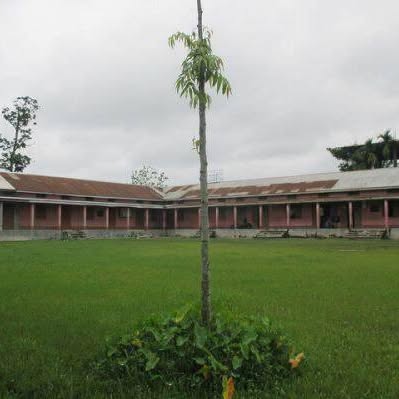
Currently, the initiative partners with select rural schools in Rangia, engaging students and educators through targeted interventions.
These include infrastructural enhancements, resource provisioning, capacity-building workshops, and digital literacy sessions to strengthen their educational foundation. This work links art and activism with youth development.
Our aim extends beyond charitable handouts. We seek to empower these children as peer guides and mentors for their juniors through a structured fellowship model.
ART has benefited 800 children and counting and provided training to more than 60 faculty members. We have been featured on major platforms like The Hans India, India CSR, Sentinel Assam, Global Indian, Clear Cut Magazine, Eat My News, The Entrepreneur Bytes, etc.
₹5,80,000
Every rupee goes straight into ART’s work in Rangia — capacity-building workshops, digital-literacy sessions, and the peer-fellowship model that keeps it running after we leave. The crowdfund is how that scales past what a handful of supporters can carry alone.
Download our Impact Report 2025-2026 :
If not now, then when? If not you, then who?
KAILASH SATYARTHI
Check out how we are creating ripples with every act of peace on the Billion Acts portal. These efforts start small and grow.
Moreover, added to a collective effort, it grows a wave of positive change across borders and communities. This art and activism approach links personal acts to broader social outcomes. The platform serves as a living archive of these efforts. It demonstrates how individual actions, often quiet and unassuming, can accumulate into meaningful, measurable impact.
Rangia Youth Tanuj Samaddar Wins Global PeaceJam Fellowship, One of Only Five Awardees Worldwide (Sentinel Assam)
Rangia Youth Tanuj Samaddar Wins Global PeaceJam Fellowship, One of Only Five Awardees Worldwide (Dailyhunt)
Leader Watch: The Rise of the Portfolio Activist and What It Means for Indian Business (Cite HR)
रंगिया के युवा तनुज समद्दर ने ग्लोबल पीसजैम फेलोशिप जीती, दुनिया भर में सिर्फ़ पाँच पुरस्कार पाने वालों में से एक (Jan se Rishta)
Billion Acts Peace Fellowship (Ajmal IAS Academy)
Tanuj Samaddar – Billion Acts Peace Fellowship (Pragyanxetu)
Tanuj was named among India’s top 10 visionary leaders of 2026 by Mid-Day, India’s leading morning daily, highlighting his contribution to shaping forward-looking discourse and practice and affirming his growing national prominence.
Tanuj
Samaddar
I build programs where creativity becomes a tool for change, not decoration. My work centers on young people: giving them the mentorship, the platforms, and the belief that their voice already carries weight.
Through Action for a Resilient Tomorrow (ART), I work with schoolchildren in Rangia, Assam, turning education and mental well-being into a fellowship model — where today’s students become tomorrow’s peer mentors, supported by the PeaceJam Foundation’s Billion Acts Peace Fellowship.
-
01 Art-based activism +
Using creative practice as a direct instrument for civic and social change, not a side project to it. -
02 Art-driven community engagement +
Bringing neighborhoods and schools together through shared creative work, built around local discretion, not imported templates. -
03 Arts education & leadership development +
Infrastructure, capacity-building workshops, and digital-literacy sessions in rural schools across Rangia. -
04 Creative social impact +
Applying the Problem Driven Iterative Approach (PDIA) to design programs that measurably move outcomes, not just visibility. -
05 Youth empowerment through art +
Turning today’s students into tomorrow’s peer guides and mentors, rather than relying on one-off charitable handouts.